

Last updated: October 2026
Probably not. There’s little evidence that people build a tolerance to CBD the way they do to THC. Animal studies found none, and in a long-term trial of prescription CBD results held for up to three years. One epilepsy study did report tolerance at very high doses. If CBD seems to fade, dose, timing or product quality are likelier causes.
This guide explains what the research shows (including the one study that found tolerance), how CBD differs from THC, whether “reverse tolerance” is real, what to check before you increase your dose, and when a break makes sense.
Switching products? Check the batch lab report first. Our Broad Spectrum CBD Oil and Broad Spectrum CBD Capsules are made in the UK and tested by ISO 17025 accredited labs, with reports available from our lab testing page.
What is tolerance?
Tolerance is when your body adapts to a substance so that the same amount has less effect, and you need more to get the same result. It often happens because receptors in the body become less sensitive or fewer in number. Caffeine, alcohol, some sleeping tablets and THC are well-known examples. Tolerance is different from dependence, where stopping causes withdrawal symptoms, although the two often go together.
One word causes a lot of confusion here. When a CBD study says a dose was “well tolerated”, it means people had few side effects. It says nothing about tolerance in the sense of CBD wearing off.
Can you build a tolerance to CBD?
For most people, the evidence says it’s unlikely. THC causes tolerance by switching on the brain’s CB1 receptors over and over, which makes the brain reduce them. CBD doesn’t activate CB1 receptors in the same way. It works more indirectly, for example by slowing the breakdown of anandamide, one of the body’s own cannabinoids, and by acting on other targets such as serotonin receptors. That’s why it isn’t expected to wear down receptors the way THC does.
Research on everyday supplement doses over many years is still limited, and we couldn’t find a human study designed specifically to test tolerance at food supplement levels. So “little evidence of tolerance” is more accurate than “impossible”. But what we have is reassuring.
What the research shows
| Study | What it found |
|---|---|
| Hayakawa, 2007 (mice, 14 days) | Repeated THC led to tolerance and reduced CB1 receptors; repeated CBD did not lose its effect |
| Bergamaschi, 2011 (safety review) | Chronic use, and high doses up to 1,500mg a day, were reported to be well tolerated in humans |
| Scheffer, 2021 (315 patients, median 444 days) | In long-term use of prescription CBD (Epidyolex), results were sustained in 12-week checks up to week 156, about three years |
| Taylor, 2020 (30 healthy adults) | After 4 weeks of high-dose CBD, stopping suddenly caused no withdrawal symptoms |
| Uliel-Sibony, 2021 (84 patients analysed) | With a CBD-rich cannabis oil that also contained THC, 21 people (25%) met the study’s definition of tolerance after an average of 7.3 months |
| World Health Organization, 2018 | In humans, CBD shows no effects indicative of abuse or dependence potential |
The medical studies used much higher doses than food supplements, so they don’t tell us everything about everyday use. But if tolerance were a strong effect, you would expect it to show up most clearly at high doses.
The one study that did find tolerance
If you search this topic you’ll see headlines saying CBD stops working for a third of people. They come from an Israeli study of 92 children and adults with hard-to-treat epilepsy, first presented in 2018 and published in 2021. In the published paper, 21 of the 84 people analysed (25%) needed at least 30% more oil, or had at least 30% more seizures, after an average of about seven months.
It’s worth taking seriously, but it doesn’t translate neatly to everyday CBD:
- It wasn’t pure CBD. The oil had one part THC to every 20 parts CBD, and THC tolerance is well established.
- The doses were very high. The average was about 11mg per kg of body weight a day. For a 70kg adult that’s roughly 800mg, about 80 times the FSA’s 10mg a day figure.
- There was no comparison group, and epilepsy can change over time for many reasons.
- The authors were cautious, describing tolerance as plausible and calling for more research.
By contrast, the long-term trial of purified prescription CBD in the table above, which contains no THC, showed results holding steady for around three years.
CBD tolerance vs THC tolerance
| CBD | THC | |
|---|---|---|
| Activates CB1 receptors? | Not directly | Yes, strongly |
| Tolerance with regular use | Little good evidence | Yes, well documented in people |
| Withdrawal when stopping | None found in trials | Common in heavy users: irritability, poor sleep, cravings |
| Recovery after stopping | Not applicable | Brain scans show CB1 receptors recover over about 4 weeks |
| UK legal status | Legal as a food supplement | Controlled drug |
THC tolerance is real. A 2018 systematic review from King’s College London found that regular cannabis users react less to THC than occasional users, with the strongest tolerance for effects on thinking and memory, and partial tolerance for the “high” and effects on the heart.
Using full spectrum CBD? Full spectrum products can contain small amounts of THC, so you may be taking a little THC every day. Whether trace amounts are enough to cause tolerance hasn’t been studied. It’s one more reason we only make broad spectrum products with 0% THC. Read more in CBD vs THC, what is full spectrum CBD? and full spectrum vs broad spectrum.
Does CBD lower your THC tolerance?
You’ll see claims online that CBD can “reset” THC tolerance. We couldn’t find good human evidence for this. In a 2018 rat study, animals given CBD alongside THC for several days actually showed a bigger drop in THC’s effect than those given THC alone, possibly because CBD changed how THC was broken down. Animal results don’t carry over directly to people, but they don’t support the claim either.
Is “reverse tolerance” real?
You’ll read online that CBD causes “reverse tolerance”, meaning you need less over time. Some long-term users do say they can lower their dose and still feel the same. But we couldn’t find any human study that has tested it, so there’s no good research showing reverse tolerance happens. More likely explanations are that people settle into a steady routine, other parts of life change, or they simply find the dose that suits them. It’s a nice idea, but we’d treat it as unproven.
Why CBD might seem to stop working
| Possible cause | What to try |
|---|---|
| Different batch or product | Check the lab report for your batch; CBD content can vary between brands and batches. See how to read a lab report |
| Taking it on an empty stomach | Take it with food containing some fat, which can raise absorption around fourfold. See CBD bioavailability |
| Inconsistent use | Take it at the same time each day |
| Dose too low, or too high | Adjust slowly; in one study a middle dose worked best and the highest didn’t. See CBD dosage |
| Wrong time of day | Match timing to your routine. See when to take CBD oil |
| Life has changed | More stress, less sleep, more alcohol or more caffeine can outweigh any supplement |
| Old or badly stored oil | Check the best-before date; store away from heat and light |
| Expectations | CBD’s effects are subtle, and it isn’t a treatment for any condition; keep a short diary to spot real changes |
Product quality is a bigger issue than many people realise. When researchers tested 29 CBD oils bought in the UK, only 11 (38%) contained within 10% of the CBD stated on the label, and over half had measurable THC or CBN. If a new bottle feels weaker than your last one, the bottle may be the problem rather than your body.
More in why isn’t CBD working for me?
What to check before increasing your dose
Before you assume tolerance and reach for more, work through this list. Most people find the answer in the first few steps.
- Check the lab report (COA) for your batch. Make sure the CBD content matches the label and the THC result is what you expect.
- Work out how many mg you’re really taking. Drops vary in strength between bottles. Our CBD dosage guide shows how to work out mg per drop from any bottle.
- Take it with food. In a trial in healthy adults, a high-fat meal raised the amount of CBD reaching the blood by about four to five times compared with fasting.
- Be consistent for two weeks. In the same trial, blood levels of CBD levelled off after about two days of regular twice-daily dosing, so judge it over a fortnight of steady use rather than a day or two.
- Check the format and timing. Oil held under the tongue and capsules behave differently. See CBD oil vs capsules and how long CBD takes to work.
- Be honest about what you expect. CBD isn’t a treatment for any condition. Our guide to what the research on CBD actually shows sets out where the evidence is strong and where it’s thin.
- Look at the rest of your life. A busier month, less sleep, more alcohol or more coffee can easily mask any small change.
- Only then, increase slowly. The FSA’s 10mg a day figure is precautionary advice rather than a legal limit, set while longer-term safety research continues. At Evopure we think it is a very cautious figure, and many adults use more. If you go above it, increase slowly, and check with your GP or pharmacist first if you take any medication. More in the CBD daily limit in the UK.
Do you need a CBD tolerance break?
There’s no evidence you need one, and no research-based length for a CBD “tolerance break”, because tolerance hasn’t been shown with everyday use. But a short break of a week or two is harmless, and it can be a useful way to check how much difference CBD makes for you. If you notice little change when you stop, you might not need it, or a different product, dose or time of day might suit you better.
Pick a normal, relaxed week for your break rather than a busy or stressful one, so you’re comparing like with like. When you restart, go back to your usual dose rather than a higher one.
If you take prescription CBD (Epidyolex), don’t stop or change your dose without speaking to your specialist.
CBD, medicines and who should avoid it
CBD can affect how the liver breaks down some medicines, which is why the safety reviews flag drug interactions as something to watch. If you take any regular medication, speak to a pharmacist or your GP before taking CBD, and again before increasing your dose. See can CBD interact with medication? and is CBD bad for your liver?
As a precaution, the FSA advises that CBD isn’t recommended for under-18s, anyone taking medication, people trying to conceive, or anyone pregnant or breastfeeding, unless under medical direction. We don’t recommend our products during pregnancy or breastfeeding, and all Evopure products are for adults (18+) only.
Is CBD addictive? Can it cause withdrawal?
The World Health Organization’s 2018 review found no evidence that CBD has abuse or dependence potential in humans, and a controlled trial found no withdrawal symptoms when people stopped high doses suddenly. The risk comes from products containing THC, which is why lab-tested, THC-free CBD matters. Read more in is CBD addictive?, CBD side effects and how long CBD stays in your system.
Why a consistent, THC-free product helps
You can only tell whether CBD is still working if you know exactly how much you’re taking. That’s easier with a product that’s the same strength every time and contains no THC.
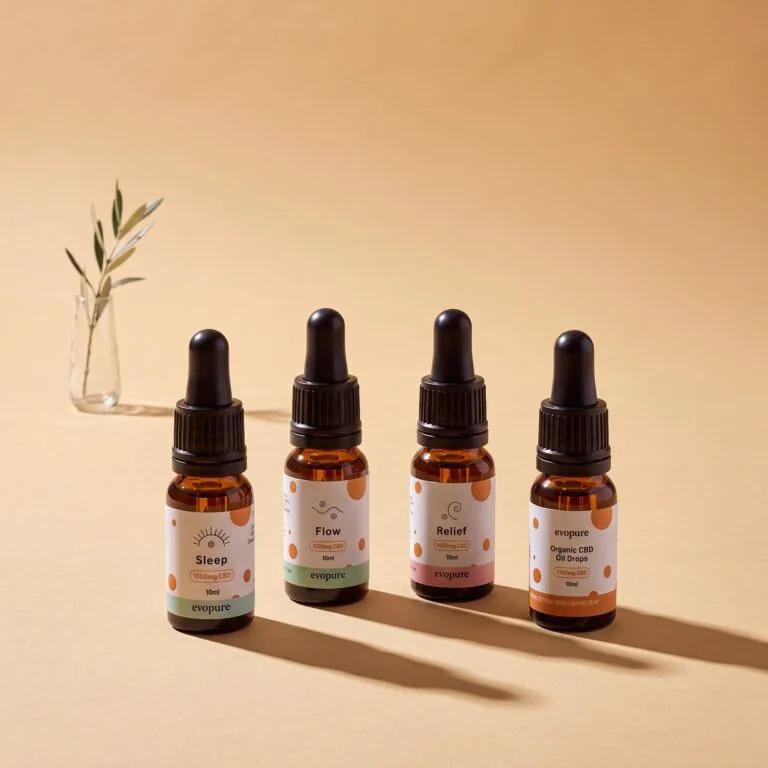
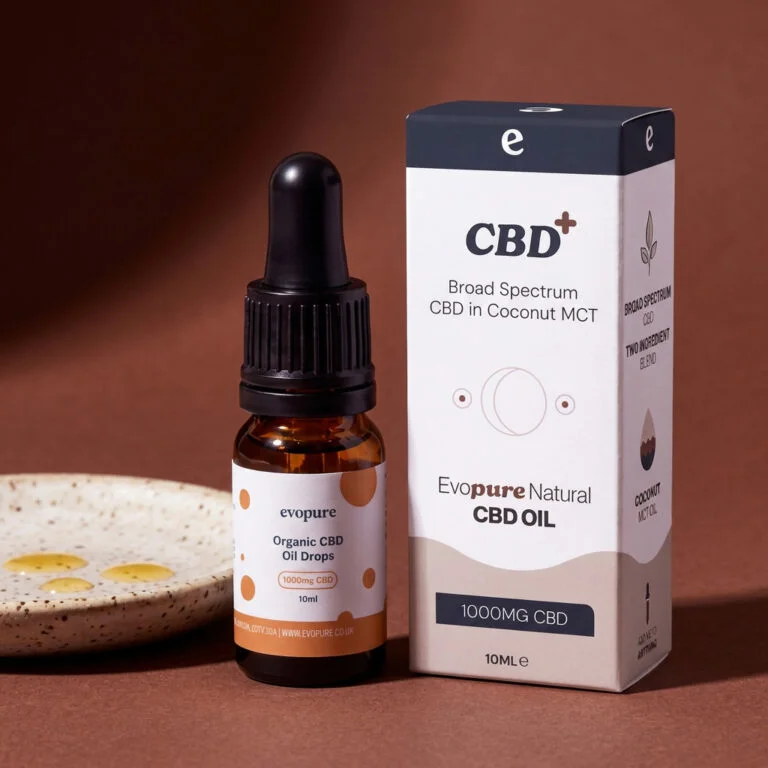
- Broad Spectrum CBD Oil: CBD in organic MCT oil, in 500mg, 1,000mg and 2,000mg 10ml bottles (5%, 10% and 20%), which works out at about 2.5mg, 5mg or 10mg per drop.
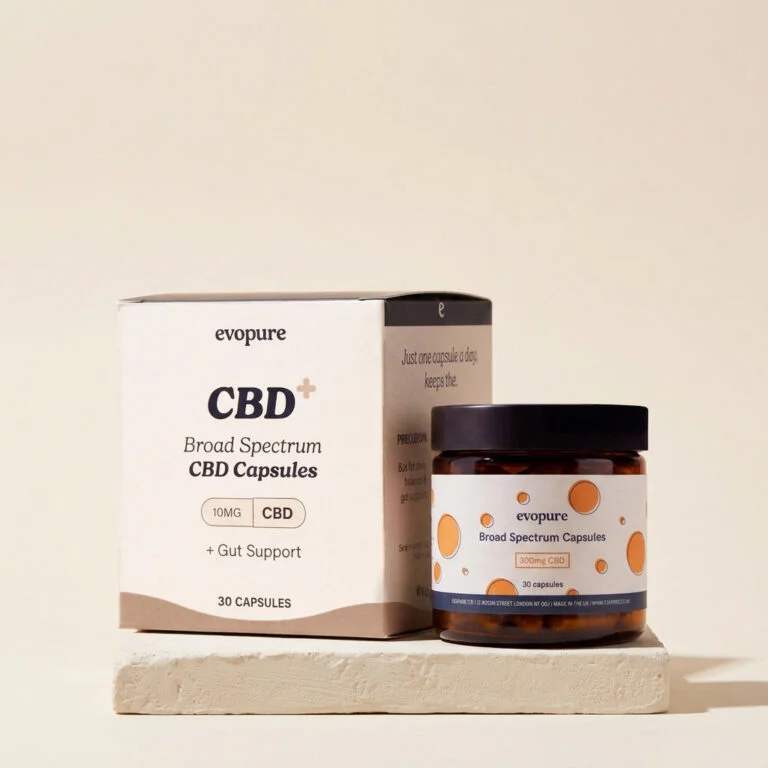
- Broad Spectrum CBD Capsules: a fixed 10mg or 25mg per capsule, in a plant-based HPMC shell, with nothing to measure.
Both are broad spectrum with 0% THC, vegan, made in the UK and third-party tested at ISO 17025 labs, with reports on our lab testing page. Our CBD products are on the FSA’s public list of products linked to validated novel food applications. See also best CBD capsules UK.
FAQs
Can you build a tolerance to CBD?
There’s little good evidence that you can. Animal studies found no tolerance with repeated CBD, and long-term trials of prescription CBD showed results held for up to three years. One epilepsy study using very high doses of an oil that also contained THC reported tolerance in a quarter of patients.
Does CBD oil stop working over time?
Not usually. If it seems to, check the product’s lab report, take it with food, keep timing consistent, and review your dose before assuming tolerance.
Do I need to increase my CBD dose over time?
Most people don’t. If you do increase it, go up slowly in small steps and check with a pharmacist if you take medication.
Is it OK to take CBD every day?
Yes, most people take it daily. Stick to sensible amounts, buy lab-tested THC-free products and check with your GP if you take regular medication.
Should I take a break from CBD?
You don’t need to, but a short break is harmless and can help you see how much difference it makes.
Does CBD cause withdrawal?
No withdrawal was found in a controlled trial where healthy adults stopped high-dose CBD suddenly after four weeks.
Is CBD tolerance the same as THC tolerance?
No. THC causes tolerance by repeatedly activating CB1 receptors. CBD doesn’t activate them in the same way and hasn’t been shown to cause tolerance with everyday use.
How long should a CBD tolerance break be?
There’s no research-based answer, because tolerance to CBD hasn’t been shown with everyday use. If you want to see how much difference CBD makes for you, a week or two off during a normal week is a sensible, harmless test.
Can CBD stop working after a few months?
It can seem to. Before assuming tolerance, check your batch’s lab report, take it with food at the same time each day, and look at changes in sleep, stress, alcohol or caffeine. The one study that reported tolerance used very high doses of an oil containing THC.
Does CBD lower your THC tolerance?
There’s no good evidence that it does. In a rat study, giving CBD alongside THC repeatedly led to a bigger drop in THC’s effect than THC alone.
Does full spectrum CBD cause tolerance?
Full spectrum products can contain small amounts of THC, and THC tolerance is well documented in regular cannabis users. Whether trace amounts cause tolerance hasn’t been studied. Broad spectrum products with 0% THC avoid the question.
What does “well tolerated” mean in CBD studies?
It means people had few side effects at that dose. It doesn’t mean they developed tolerance or that CBD stopped working.
Sources
- Hayakawa K et al (2007). Repeated treatment with cannabidiol but not delta9-tetrahydrocannabinol has a neuroprotective effect without the development of tolerance. Neuropharmacology.
- Bergamaschi MM et al (2011). Safety and side effects of cannabidiol, a Cannabis sativa constituent. Current Drug Safety.
- Iffland K, Grotenhermen F (2017). An update on safety and side effects of cannabidiol: a review of clinical data and relevant animal studies. Cannabis and Cannabinoid Research.
- Scheffer IE et al (2021). Add-on cannabidiol in patients with Dravet syndrome: results of a long-term open-label extension trial. Epilepsia.
- Uliel-Sibony S et al (2021). Cannabidiol-enriched oil in children and adults with treatment-resistant epilepsy: does tolerance exist? Brain and Development.
- Taylor L et al (2020). Abrupt withdrawal of cannabidiol (CBD): a randomized trial. Epilepsy and Behavior.
- Taylor L et al (2018). A phase I, randomized, double-blind, placebo-controlled, single ascending dose, multiple dose, and food effect trial of the safety, tolerability and pharmacokinetics of highly purified cannabidiol in healthy subjects. CNS Drugs.
- Liebling JP et al (2022). An analysis of over-the-counter cannabidiol products in the United Kingdom. Cannabis and Cannabinoid Research.
- Colizzi M, Bhattacharyya S (2018). Cannabis use and the development of tolerance: a systematic review of human evidence. Neuroscience and Biobehavioral Reviews.
- Hirvonen J et al (2012). Reversible and regionally selective downregulation of brain cannabinoid CB1 receptors in chronic daily cannabis smokers. Molecular Psychiatry.
- Greene NZ et al (2018). Cannabidiol modulation of antinociceptive tolerance to delta-9-tetrahydrocannabinol. Psychopharmacology.
- World Health Organization (2018). Cannabidiol (CBD) critical review report.
- Food Standards Agency, gov.uk. Cannabidiol (CBD): consumer advice.
This guide is general information, not medical advice.