






Last updated: October 2026
Yes. CBD is legal in the UK. The Home Office says pure CBD is not a controlled drug, and products are legal when they meet its “exempt product” rules, including no more than 1mg of THC or other controlled cannabinoid per container. CBD foods must also be on the FSA’s public list. CBD flower and buds are illegal.
This guide explains UK CBD law in plain English, straight from the gov.uk sources: the Home Office 1mg rule, the THC myths, the FSA’s novel food rules and public list, the FSA’s September 2026 recommendation of the first authorisations at 10mg a day, how the rules differ in Scotland and Northern Ireland, product by product answers, and what it all means for driving, travel, drug tests and buying CBD in shops.
Is CBD legal in the UK?
Yes. CBD (cannabidiol) is one of more than 100 compounds found in the cannabis plant. Unlike THC, it does not make you high, and pure CBD is not controlled under the Misuse of Drugs Act 1971. That is why you can buy CBD oil in high street shops and online across England, Scotland, Wales and Northern Ireland.
The rules that matter are about what else is in the product (no more than tiny, legally exempt traces of controlled cannabinoids), where the CBD comes from (not sold as the controlled parts of the plant), and, for food and supplements, food safety rules run by the Food Standards Agency (FSA).
The Home Office puts the position simply in its drug licensing factsheet: pure CBD, as an isolated substance, is not controlled, but “the legal status of CBD products varies depending on what the product is”. In practice that means a CBD oil is legal when it meets the exempt product rules below and, as a food supplement, is on the FSA’s public list.
How UK CBD law works
Four sets of rules overlap. Most confusion online comes from mixing them up.
| Rule | Who sets it | What it means for you |
|---|---|---|
| Drugs law | Home Office (Misuse of Drugs Act 1971 and Misuse of Drugs Regulations 2001) | Pure CBD is legal. THC and other controlled cannabinoids are Class B drugs, unless the product meets the “exempt product” definition. Cannabis flowers and leaves are controlled. |
| Food law | Food Standards Agency (FSA); Food Standards Scotland in Scotland | CBD foods and supplements are “novel foods” and must be on the FSA public list to be sold in England and Wales while they await authorisation. |
| Medicines law | MHRA | CBD products sold as food or cosmetics cannot claim to treat or cure any condition. |
| Cosmetics law | Office for Product Safety and Standards | Balms and creams follow cosmetics rules. |
The Home Office 1mg rule: what makes a CBD product legal
The Home Office’s view is that it is “nearly impossible” to extract CBD from the plant without traces of controlled cannabinoids such as THC. So most CBD products contain something controlled, and they are only legal because they meet the exempt product definition in Regulation 2 of the Misuse of Drugs Regulations 2001. All three conditions must be met:
- Not designed to deliver the controlled drug. The product must not be designed for administration of the controlled drug (for example THC) to a human or animal. Any trace has to be an unwanted by-product, not the point of the product.
- Not easily recoverable. The controlled drug must be packaged or mixed in such a way that it cannot be recovered by readily applicable means, or in a yield which constitutes a risk to health.
- No more than 1mg per container. No one component part may contain more than one milligram of the controlled drug. The Home Office says the unit that counts is the container, such as a bottle of oil, “and not (for example) the supposed typical dose”.
The 1mg limit applies to each controlled cannabinoid separately, and the Home Office expects producers to be able to show compliant levels of delta-9 THC, delta-8 THC and CBN. It says that proving this needs testing “by a suitably accredited laboratory”, accredited to ISO/IEC 17025.
Two things are worth knowing. First, the Home Office does not approve or certify CBD products: it is up to each business to make sure its products comply. Second, a product that fails any one of the three conditions is a Class B controlled drug, whatever the label says. That is why the lab report matters more than the marketing.
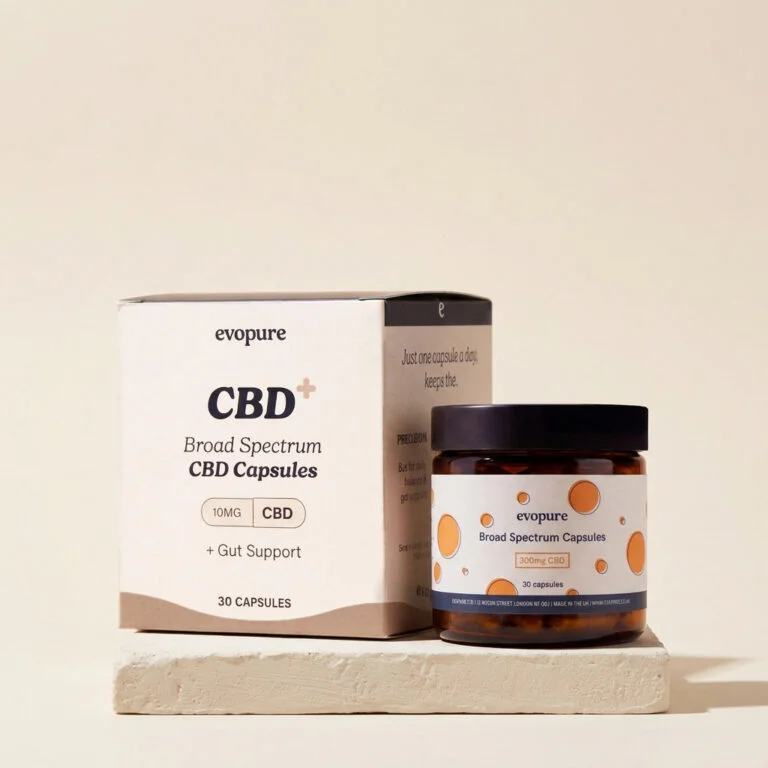
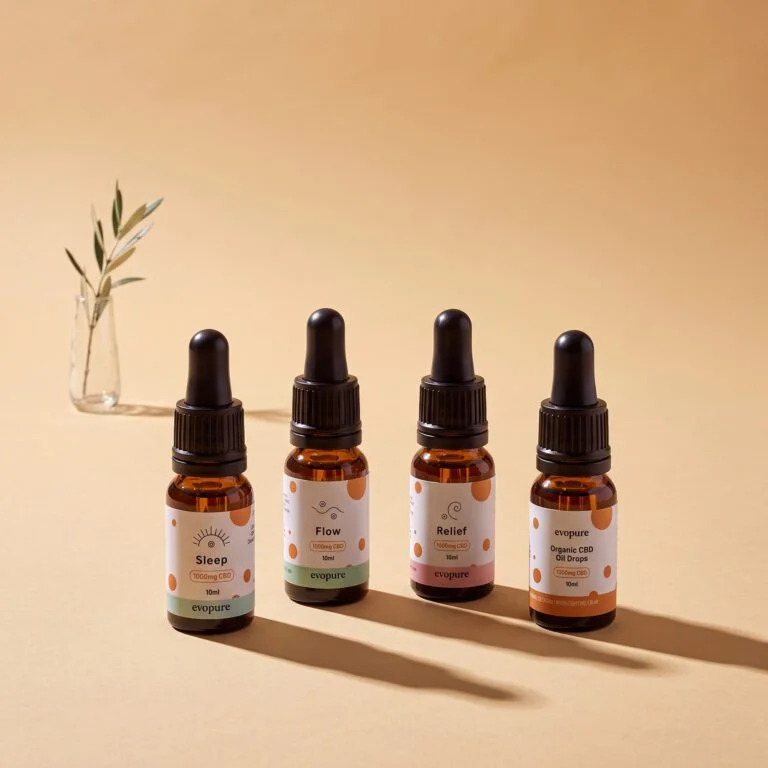
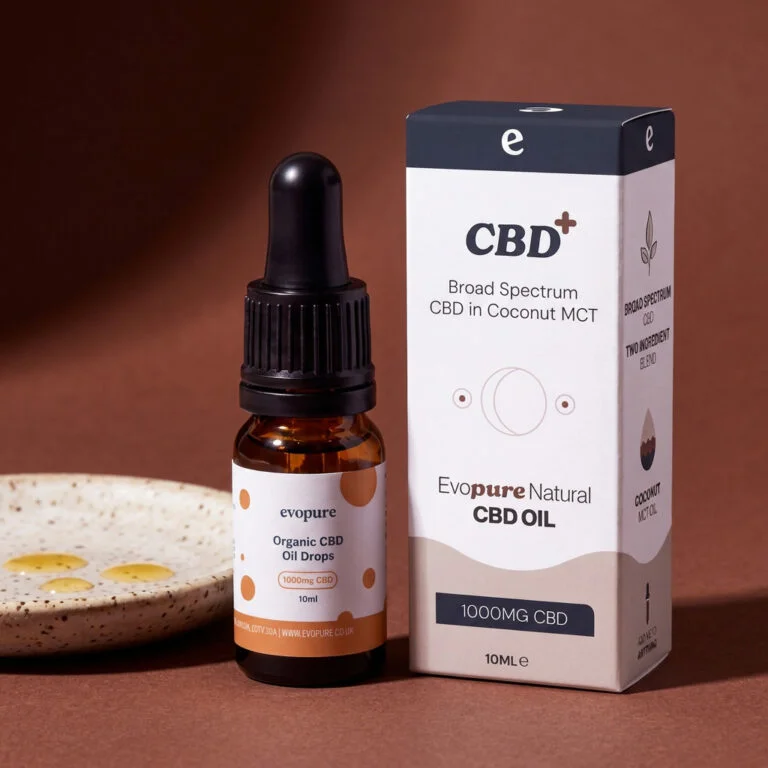
How Evopure checks this: our CBD products are broad spectrum with 0% THC, and every batch is tested by an independent ISO 17025 accredited laboratory. You can request the report for any batch on our lab testing page, and our guide to reading CBD lab reports shows what to look for.
THC rules and the “0.2%” myth
You will often read that UK CBD products can contain up to 0.2% THC. That is a myth. The 0.2% figure relates to which hemp plant varieties licensed farmers can grow, not to how much THC a finished CBD product can contain.
The Home Office’s industrial hemp factsheet confirms this. Licences are only issued for approved seed types with a THC content of no more than 0.2%, and the figure “is used solely to identify varieties which may potentially be cultivated”. It says nothing about finished products. For a bottle of CBD oil, the test that counts is the 1mg per container rule above.
Under drugs law, THC and other controlled cannabinoids are Class B drugs. Separately, for food safety, the FSA has set a safe upper limit for delta-9 THC in foods of 70 micrograms (0.07mg) a day, and asks CBD businesses to reformulate where needed so people stay below it. In practice, reputable brands sell broad spectrum or isolate products that show no detectable THC on independent lab tests.
THC oil, “cannabis oil” sold for its THC, and products such as delta-8 THC vapes are a different matter: they are designed to deliver a controlled drug, so they are not exempt products and are illegal to buy, sell or possess unless prescribed as a cannabis-based medicine. See delta-8 THC in the UK.
Read more: CBD vs THC, hemp vs marijuana and full spectrum vs broad spectrum vs isolate.
Novel foods and the FSA public list
The novel food status of CBD was confirmed in January 2019. Since then, CBD sold as food or a food supplement (oils, capsules, gummies and drinks) has counted as a “novel food”, which needs authorisation before it can be sold. Businesses had to apply to the FSA, and products linked to applications that passed the first checks were placed on the FSA’s public list. Products on that list can be sold while the applications are assessed. Products that are not on it should not be on sale.
To be on the list, a product had to meet three tests set by the FSA:
- it was on the market when the FSA made its announcement on 13 February 2020
- the FSA received an authorisation application for it by 31 March 2021
- the application was validated, or the FSA agreed it was sufficiently progressing towards validation
The FSA is clear that the list is not an endorsement. Products on it “are not formally authorised for sale” and have not yet been fully assessed for safety, but they are linked to applications moving through the process. No new CBD brands or products should have been launched since February 2020 without authorisation, and the FSA says a validated application alone is not enough to put a new product on the market.
You can search the list yourself on the FSA’s CBD products register. Each product shows the application it is linked to and its status.
The FSA’s September 2026 decision and the 10mg a day figure
On 16 September 2026 the FSA’s board agreed to send its first CBD authorisation recommendations to ministers in England and Wales, who make the final decision. It is the first time any CBD food has reached this stage in the UK. The three applications are:
| Application | Type of CBD | Purity | Maximum amount |
|---|---|---|---|
| RP 7 | Synthetic CBD | 98% or more | 10mg a day |
| RP 350 | CBD isolate | 98% or more | 10mg a day |
| RP 427 | CBD isolate | 98% or more | 10mg a day |
Under the proposed conditions, products would have to be labelled with the 10mg a day figure and warnings for under-18s, people who are pregnant, breastfeeding or trying to conceive, and people who take medication or are immunosuppressed. They would also have strict limits on THC and other controlled cannabinoids. About 3,000 products on the public list are linked to these three applications. Ministers make the final decision.
The FSA also tells local authorities to focus enforcement on CBD products that are not on the public list. That is the practical line between the legal and the risky end of the market. For the full story, including the EU’s much lower 2mg view, read the FSA’s first CBD approvals explained.
Where Evopure stands: our CBD products are on the FSA public list, linked to validated applications RP438, RP821 and RP47. They are not among the first three applications recommended for authorisation, which is the same position as most of the UK market. That means they are legal to sell while those applications are assessed. We will update this guide as they progress. Read what the FSA decision means for Evopure customers.
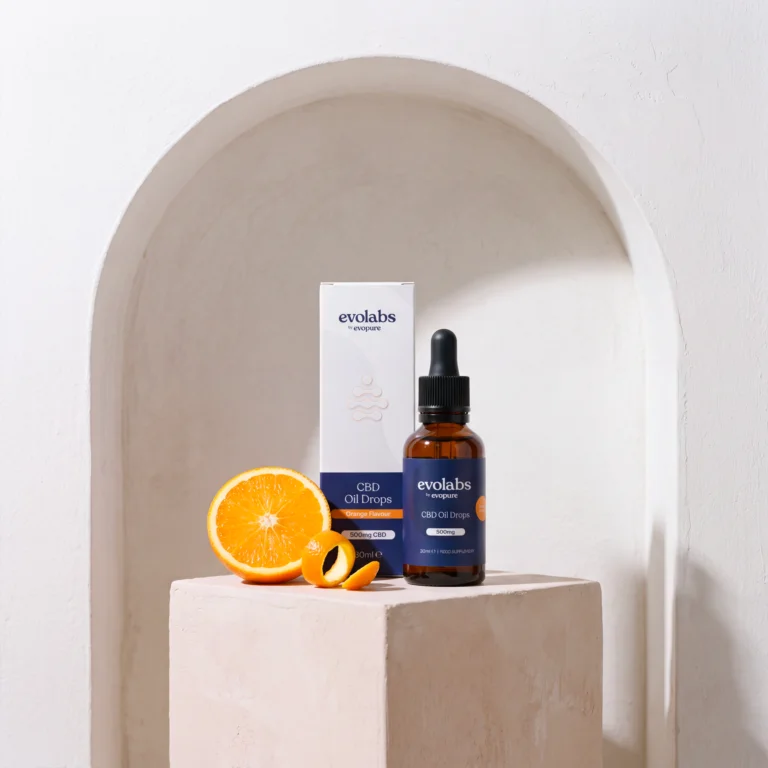
The 10mg figure comes from the FSA’s precautionary advice for healthy adults, issued in October 2023, which it describes as about 4 to 5 drops of a 5% CBD oil. Food Standards Scotland gives the same advice. With our 500mg (5%) Broad Spectrum CBD Oil, 10mg is about 4 drops. See the CBD daily limit in the UK and our CBD dosage guide.
The FSA’s 10mg a day figure is precautionary advice rather than a legal limit, set while longer-term safety research continues. At Evopure we think it is a very cautious figure, and many adults use more. If you go above it, increase slowly, and check with your GP or pharmacist first if you take any medication.
Is CBD legal in Scotland, Wales and Northern Ireland?
Yes. Drugs law is the same, so pure CBD is legal and CBD flower is not across the UK. The food rules are run differently in each nation:
| Nation | Who runs CBD food rules | Where things stand |
|---|---|---|
| England and Wales | FSA, with ministers in England and Wales deciding | The public list applies. Products on it can stay on sale while assessed. First authorisations recommended in September 2026. |
| Scotland | Food Standards Scotland (FSS), with Scottish Ministers deciding | FSS consulted on the same first three applications in 2026. It says no CBD products are authorised in Scotland yet, but recognises consumers can still buy them. FSS also advises no more than 10mg a day. |
| Northern Ireland | EU novel food rules, under the Windsor Framework | CBD foods need EU authorisation and none has been granted yet. CBD novel foods authorised in Great Britain may move into Northern Ireland through the NI Retail Movement Scheme. The FSA’s consumer advice, including 10mg a day, applies. |
Product by product: what is legal?
| Product | Legal in the UK? | What to check |
|---|---|---|
| CBD oil and drops | Yes | On the FSA public list, lab report showing no more than trace THC (ideally none detected) |
| CBD capsules | Yes | As above |
| CBD gummies and edibles | Yes | As above; keep away from children |
| CBD drinks | Yes | As above |
| CBD balms and creams | Yes | Cosmetic rules; no medical claims |
| CBD vapes and e-liquids | Yes, if they meet the exempt product rules | Only use purpose-made e-liquids; see can you vape CBD oil? |
| CBD flower, buds and “CBD weed” | No | Hemp flowers count as controlled cannabis, whatever the THC level |
| THC oil and THC vapes | No | Class B controlled drugs unless prescribed |
| Prescription CBD (Epidyolex) | Yes, on prescription only | Prescribed by a specialist for rare forms of epilepsy |
| Hemp seed oil | Yes | Contains little or no CBD; see hemp oil vs CBD oil |
Are CBD gummies legal in the UK?
Yes. Gummies are a CBD food, so exactly the same rules apply as for oils: they must be on the FSA public list and meet the exempt product rules. The FSA lists sweets and confectionery among the CBD foods sold in the UK. Because gummies look like sweets, keep them well out of reach of children. See CBD oil vs gummies.
Are CBD vapes legal in the UK?
CBD vapes are not food, so the FSA public list does not cover them. Drugs law still does: the Home Office says the exempt product definition can apply to products in any form, so a CBD vape must meet the same three conditions, including the 1mg per container limit. Be wary of vapes sold as “CBD” that are really designed to deliver THC or delta-8 THC, which are illegal. Never vape a CBD oil made for taking by mouth.
Why CBD flower and buds are illegal
Under the Misuse of Drugs Act, “cannabis” means the plant or any part of it, except the mature stalk, fibre from the stalk and the seeds. That means hemp flowers and leaves are controlled, even if they are low in THC and sold as “CBD buds” or for smoking. Selling, buying or possessing them can be an offence. CBD oils are legal because they are made from extracted CBD, not sold as the flower itself.
For the same reason, you cannot legally grow hemp or cannabis at home to make CBD. Growing hemp in the UK needs a Home Office licence, and licences only cover the parts of the plant that are not controlled. The Home Office’s hemp factsheet says the policy “does not allow for use of ‘green’ material”, meaning the leaves and flowers, and that applications to produce CBD oils from controlled parts of the plant will not be considered under it.
Prescription CBD and medical claims
CBD sold in shops is a food supplement or cosmetic, not a medicine, so it cannot legally claim to treat or cure any condition. The FSA confirms there are no authorised health claims for CBD products, and its existing ban on health and medicinal claims for CBD foods will continue after authorisation.
Separately, since November 2018 specialist doctors in the UK have been able to prescribe cannabis-based medicines. The best known CBD medicine is Epidyolex, a highly purified CBD liquid. The NHS says it can be prescribed by a specialist for Lennox-Gastaut syndrome and Dravet syndrome, two rare forms of epilepsy. Prescription medicines like this are very different from over-the-counter CBD. Read prescription CBD vs over-the-counter CBD.
Is CBD legal for anxiety or pain?
Buying and using CBD is legal whatever your reason, but CBD isn’t a treatment for anxiety, pain or any other condition, and UK law does not allow CBD food products to be sold as one. If you are dealing with a health problem, speak to your GP first, especially if you take any medication, as CBD can interact with some medicines.
Driving, travel, drug tests, children and pets
- Driving: CBD is not illegal to drive on. But under the drug driving law it is illegal to drive if you are unfit to because of drugs, or if you have certain levels of illegal drugs in your blood, even if they have not affected your driving. In England and Wales the limit for THC is 2 micrograms per litre of blood, and police can use a roadside kit that screens for cannabis. Choose THC-free products. See CBD and driving in the UK.
- Flying and travel: CBD laws vary a lot between countries. Check the rules for your destination and your airline before you pack it. See flying with CBD oil and our country-by-country guide.
- Drug tests: drug tests look for cannabis, meaning THC, rather than CBD. Products with trace THC carry a small risk of a positive result, so broad spectrum or isolate products with lab reports showing no detectable THC are the safer choice. See does CBD show up on a drug test?
- Children: CBD is not illegal for under-18s, but the FSA advises that children should not take CBD unless under medical direction. Evopure’s products are for adults (18+) only. See CBD for kids.
- Pregnancy: the FSA does not recommend CBD for people who are pregnant, breastfeeding or trying to conceive. We don’t recommend our products during pregnancy or breastfeeding.
- Pets: CBD products for animals are treated as veterinary medicines in the UK, so speak to your vet. See CBD oil for dogs.
Can you buy CBD in shops in the UK?
Yes. The FSA notes that CBD foods are widely available in shops, cafés and online, from oils, drops and sprays to capsules, sweets, bakery products and drinks. You do not need a prescription for CBD food supplements, and buying them online is just as legal as buying them on the high street.
The catch is that being on a shop shelf does not prove a product is legal. Some products on sale are not on the FSA public list, and some sold as “CBD” contain more THC than the law allows. Use the checklist below wherever you buy, and see our guide to the best CBD oil in the UK for how we compare brands on the public list, lab testing and strength. If you prefer capsules, see the best CBD capsules in the UK.
How to check a CBD product is legal
Run through these five checks before you buy. A legal, well-made product passes all of them.
- Check the FSA public list. Search the brand on the FSA register, or ask the brand which application its products are linked to (Evopure’s are RP438, RP821 and RP47).
- Read the lab report for the batch: it should show the CBD content and THC, delta-8 THC and CBN at no more than trace levels, ideally not detected. Check it comes from an ISO 17025 accredited lab. See how to read CBD lab reports.
- Avoid medical claims. A brand promising to treat or cure a condition is breaking the rules.
- Avoid flower, buds and THC products, which are not legal in the UK.
- Check the label for the CBD per serving and safety warnings, and stick to the label’s daily amount. See our CBD dosage guide.
Related guides
- See what is CBD? for a complete beginner’s guide.
- Best CBD oil UK: how to check a brand is legal and tested.
- The FSA’s first CBD approvals explained.
- Is CBD tea legal in the UK?
- Can you extract CBD at home in the UK?
- CBD balms and creams fall under cosmetics rules rather than food rules: see is CBD balm legal in the UK?
- For why the 0.2% figure doesn’t apply to finished products, see is full spectrum CBD legal in the UK?
- CBD isolate in the UK: what it is and the rules.
- Are CBD brownies legal in the UK?
- Whether CBD distillate is legal in the UK.
- The law treats CBD and THC differently because only THC is intoxicating; see does CBD get you high?
- Taking medication? The FSA does not recommend CBD unless under medical direction; see can CBD interact with medication?
- The Home Office names CBN alongside THC as a cannabinoid a legal product must keep under the 1mg limit: see is CBN legal in the UK?
- For how many people in the UK use CBD and how big the market is, see our CBD statistics for the UK.
FAQs
Is CBD oil legal in the UK?
Yes. CBD oil is legal to buy and sell in the UK as long as it meets the Home Office exempt product rules, including no more than 1mg of THC or any other controlled cannabinoid per bottle, and, as a food supplement, is linked to an application on the FSA’s public list.
Is CBD a controlled substance in the UK?
No. Pure CBD is not controlled under the Misuse of Drugs Act 1971. THC and other controlled cannabinoids are Class B drugs, and cannabis flowers and leaves are controlled.
When did CBD become legal in the UK?
CBD itself has never been a controlled drug in the UK. What changed was regulation: the novel food status of CBD was confirmed in January 2019, the FSA then published a public list of CBD products linked to applications, and in September 2026 the FSA recommended the first full authorisations.
Is CBD flower legal in the UK?
No. Hemp flowers and buds count as controlled cannabis under UK law, whatever their THC level, so selling, buying or possessing them can be an offence.
Can you smoke CBD legally in the UK?
Not CBD flower or buds, which are controlled. Purpose-made CBD vape liquids that meet the exempt product rules, with no more than 1mg of any controlled cannabinoid per container, are legal.
What is the THC limit for UK CBD products?
There is no 0.2% limit for products; that figure relates to hemp plant varieties. Under drugs law a product can contain no more than 1mg of THC (or any other controlled cannabinoid) per container, and the FSA’s food safety upper limit is 70 micrograms (0.07mg) of THC a day. Choose products with lab reports showing no detectable THC.
Are CBD gummies and drinks legal in the UK?
Yes, as long as they meet the exempt product rules and are linked to an application on the FSA’s public list.
Is CBD oil available over the counter in the UK?
Yes. CBD food supplements are sold over the counter in shops, pharmacies and online. Prescription cannabis medicines are different and can only be prescribed by specialist doctors.
Can I grow hemp at home to make CBD?
No. Growing hemp or cannabis needs a Home Office licence, and hemp flowers and leaves are controlled.
Is CBD legal for children and pets?
It is not illegal for children, but the FSA advises under-18s not to take CBD unless under medical direction. CBD products for animals are treated as veterinary medicines, so speak to your vet.
Can I drive or fly with CBD?
CBD is not illegal to drive on, but driving with THC above the legal limit is an offence, so choose THC-free products. Rules for flying vary by country, so check before you travel.
Is CBD legal in the UK in 2026?
Yes. In 2026 pure CBD is still not a controlled drug, CBD products are legal when they meet the Home Office exempt product rules (including no more than 1mg of THC per container), and CBD foods must be on the FSA public list. In September 2026 the FSA recommended the first full authorisations, at up to 10mg a day; ministers make the final decision.
Can you buy CBD in shops in the UK?
Yes. CBD oils, capsules, gummies and drinks are sold in shops, pharmacies, cafés and online without a prescription. Being on a shelf does not prove a product is legal, so check it is on the FSA public list and has an independent lab report.
Is THC oil legal in the UK?
No. THC is a Class B drug. Oils and vapes designed to deliver THC, including delta-8 THC, are not exempt products, so they are illegal unless prescribed as a cannabis-based medicine by a specialist doctor.
Is CBD legal in Scotland and Northern Ireland?
Yes. Drugs law is the same across the UK. In Scotland, Food Standards Scotland runs the novel food rules and Scottish Ministers decide on authorisations. In Northern Ireland, CBD foods follow EU novel food rules under the Windsor Framework, and none has been authorised there yet.
Is it legal to use CBD for anxiety or pain in the UK?
Buying and using CBD is legal whatever your reason, but CBD isn’t a treatment for anxiety, pain or any other condition, and CBD food products cannot legally be sold as one. Speak to your GP about any health problem, especially if you take medication.
Is Evopure CBD legal?
Yes. Evopure’s CBD products are broad spectrum with 0% THC and are on the FSA public list, linked to validated applications RP438, RP821 and RP47. They are not among the first three applications recommended for authorisation, so they are legal to sell while their applications are assessed.
Sources
- Home Office. Drug licensing factsheet: cannabis, CBD and other cannabinoids (updated October 2024).
- Home Office. Industrial hemp licensing factsheet (updated December 2025).
- Food Standards Agency. Cannabidiol (CBD) guidance (updated August 2026).
- Food Standards Agency. Cannabidiol (CBD): consumer advice.
- Food Standards Agency. CBD products linked to novel food applications (the public list).
- Food Standards Agency. CBD novel food applications: recommendations to ministers on first authorisations (September 2026).
- Food Standards Scotland. Cannabidiol (CBD) products.
- NHS. Medical cannabis (and cannabis oils).
- GOV.UK. Drugs and driving: the law, and Department for Transport, changes to drug driving law.
This guide is general information, not legal advice.