
Last updated: October 2026
A CBD balm is a thick, rub-in skin product that mixes CBD (cannabidiol) with plant oils or waxes and often cooling oils such as peppermint or eucalyptus. In the UK it is sold as a cosmetic for massage, not a medicine. Very little CBD reaches the bloodstream, so it won’t make you high. Patch test first.
This guide covers what CBD balm is and what people use it for, whether CBD gets through the skin, how to use it and how much, balm vs oil and creams, UK rules, drug tests, safety and a checklist for choosing a good CBD balm in the UK. Comparing it with a menthol rub? See CBD balm vs Tiger Balm.
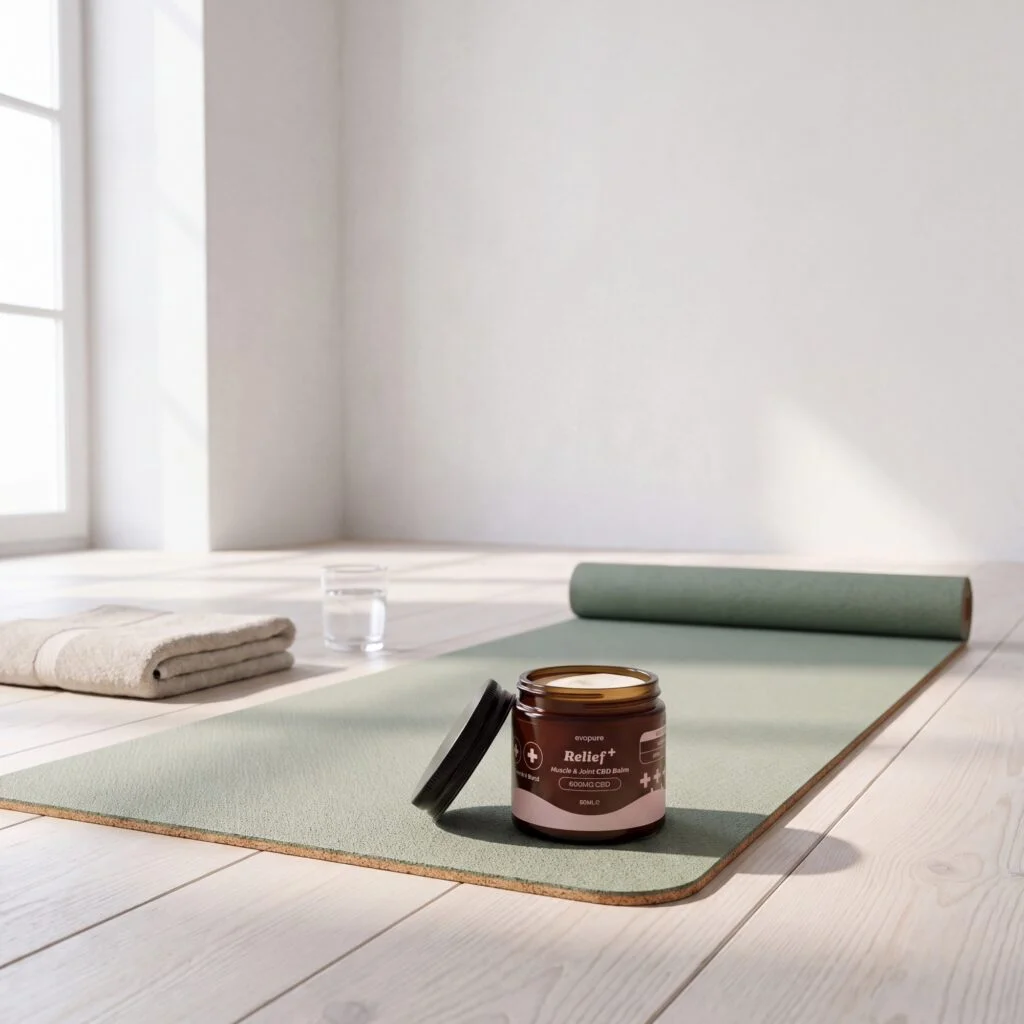
Looking for a CBD balm? Our CBD Balm, Muscle and Joint Support has 600mg of broad spectrum CBD per tin (10mg per ml) with peppermint, eucalyptus and juniper in a plant oil base. It’s cooling, non-greasy, vegan, made in the UK and third-party lab tested, with 0% THC. For adults only.
What is CBD balm?
A CBD balm is a thick, rub-in product that combines CBD with oils, butters or waxes and usually essential oils such as peppermint or eucalyptus. It’s applied to the skin over a specific area rather than taken by mouth. In the UK, CBD balms are sold as cosmetics, so they can’t claim to treat medical conditions.
Most CBD balms have four parts:
- CBD extract: broad spectrum (no THC), full spectrum (may contain traces of THC) or isolate (CBD only). See full spectrum vs broad spectrum vs isolate.
- A carrier: plant oils such as sunflower or coconut, which make up most of the balm and help it spread.
- A thickener: a wax or butter (beeswax in many balms, plant waxes in vegan ones) that gives the solid, scoopable texture.
- Cooling or warming botanicals: peppermint, eucalyptus, menthol or camphor for a cooling feel, or ginger and pepper extracts for warmth.
What is CBD balm used for?
People mostly use a CBD balm as a massage balm on a specific area. Common times are:
- After exercise: massaged into calves, thighs or shoulders as part of a cool-down. See our guide to muscle recovery for what matters most (sleep, protein, rest days).
- After a long day at a desk: on the neck, shoulders and upper back. Our stiff neck and upper back pain guides have simple stretches to pair with it.
- On stiff joints in the morning or evening: knees, hands and hips. Our joint pain guide covers causes and NHS advice.
- As a wind-down ritual: a slow self-massage before bed, away from the face and eyes.
To be clear: a CBD balm is a cosmetic, and CBD isn’t a treatment for pain, arthritis or any injury. If pain is severe, keeps coming back, follows a fall or comes with swelling, numbness or fever, see a pharmacist or GP. For what the research on CBD and pain actually shows, see CBD for pain: what the trials show.
Does CBD absorb through the skin?
Into the skin, yes. Into the bloodstream, only a little from an ordinary balm. Your skin’s outer layer is a strong barrier, so there’s an important difference between two kinds of product:
- Topical products (balms, creams, gels) are made to work on and in the skin where you put them.
- Transdermal products (some patches and specially formulated gels) use ingredients that push CBD through the skin and into the blood.
What the studies show:
- A 2004 laboratory study on donated human skin found CBD can pass through skin, and that adding alcohol increased how much got through.
- A 2024 Johns Hopkins study gave 46 healthy adults a CBD cream, lotion, patch, balm, gel or placebo to use twice a day for 9 days. CBD was found in the blood for three of the five products, at levels that built up over 7 to 10 days. The highest levels came from the lotion, which had the most CBD and an ingredient added to help it through the skin.
- A 2026 crossover study in 20 adults compared one dose of the same hemp product taken by mouth and applied to the skin. After skin use, CBD in the blood was low and often too low to measure; total exposure was around 15 times higher by mouth.
- A 2023 study of a transdermal gel designed to deliver CBD into the blood did find measurable CBD, peaking around 8 hours after application.
So a balm works mostly where you rub it in, which is why it doesn’t count towards the CBD you swallow. If CBD from oils hasn’t seemed to do much for you, our guide to CBD bioavailability explains why the route matters.
Does CBD balm work? The research
Research on CBD applied to the skin is early and small. These are the most cited studies:
| Study | What it found |
|---|---|
| Heineman, 2022 (18 adults with thumb arthritis, controlled crossover trial) | A CBD and shea butter cream applied twice daily for 2 weeks improved pain and function scores more than shea butter alone, with no side effects reported |
| Xu, 2020 (29 adults with nerve pain in the feet, placebo-controlled trial) | Topical CBD oil over 4 weeks reduced intense pain, sharp pain, and cold and itchy sensations more than placebo |
| Hammell, 2016 (rats with arthritis) | CBD gel applied to the skin reduced joint swelling and pain behaviours |
| Zamarripa, 2024 (46 healthy adults, five topical products) | Products were well tolerated and produced no noticeable effects on how people felt, their thinking and reactions, or physical measures |
The trials are small, involve medical conditions and used their own formulas, so they don’t show that a CBD balm will help everyday muscle aches, and CBD balm isn’t a treatment for pain or arthritis. Much of what people notice after using a balm comes from the cooling botanicals and the massage itself. For more on the evidence, see CBD for arthritis and CBD for muscle recovery vs ibuprofen. For aches from sport or work, see also magnesium for cramps and CBD for athletes.
How to use CBD balm: step by step
- Patch test a small amount on your inner arm and wait 24 hours.
- Start with clean, dry skin, ideally after a warm shower or bath.
- Scoop a pea to coin-sized amount per area; you can add more if needed.
- Massage firmly for 1 to 2 minutes in circular motions until absorbed, working into the muscle.
- Wash your hands afterwards, and keep them away from your eyes.
- Reapply up to three times a day if you like.
Good times to use it: after a workout or run, at the end of a long day at a desk, or before bed on stiff areas. Don’t use it on broken or irritated skin.
How much CBD balm to use, and how often
There’s no official dose for a CBD balm, because it’s a cosmetic rather than something you swallow. A practical way to think about it is CBD per ml:
| Balm | CBD per ml | CBD in about 1ml (a coin-sized amount) |
|---|---|---|
| 300mg in a 50ml tub | 6mg | About 6mg |
| 600mg in a 60ml tin | 10mg | About 10mg |
| 1,000mg in a 50ml tub | 20mg | About 20mg |
Always compare the mg per ml, not just the mg on the front: a bigger number on a bigger tub can be the same strength. Most people use a balm once to three times a day on the same area. Since very little reaches the bloodstream, balm doesn’t meaningfully count towards a daily CBD intake. For CBD you swallow, see our CBD dosage guide.
CBD balm vs CBD oil
| CBD balm | CBD oil | |
|---|---|---|
| How it’s used | Massaged into the skin | Drops under the tongue |
| Where it acts | Locally, where applied | Throughout the body |
| Felt | Within minutes (mainly the cooling botanicals and massage) | 15 to 45 minutes |
| Best for | A specific stiff or tired area | Daily routines, evenings, general wellbeing |
| Reaches bloodstream? | Very little | Yes |
| Counts towards daily CBD intake? | Not meaningfully | Yes |
| UK rules | Cosmetics regulations | Food (novel food) rules and FSA advice |
Many people use both: an oil as part of a daily routine and a balm on a specific area. If you take a CBD oil or capsules as well, the FSA advice applies to that part. The FSA’s 10mg a day figure is precautionary advice rather than a legal limit, set while longer-term safety research continues. At Evopure we think it is a very cautious figure, and many adults use more. If you go above it, increase slowly, and check with your GP or pharmacist first if you take any medication.
See CBD oil vs capsules and, if you’re choosing an oil, how to choose a CBD oil for aches and pains.
CBD balm vs cream, rubs and other topicals
The main difference is texture. A balm is the most concentrated and solid; a cream contains water, so it is lighter and spreads further.
| Type | Texture | Good for |
|---|---|---|
| Balm | Thick, concentrated, no water | Firm massage into one area |
| Cream or lotion | Lighter, absorbs quickly | Larger areas, daily skincare |
| Roll-on or gel | Cooling, mess-free | On the go, gym bags |
| Menthol or camphor muscle rub (no CBD) | Varies | A strong cooling or warming feel |
| Bath products | Dissolves in water | A relaxing soak |
| Transdermal patch | Sticks to skin | Designed to reach the bloodstream, unlike balms |
For a side-by-side with the best-known menthol rub, read CBD balm vs Tiger Balm. For CBD in skincare, see CBD for skin.
What’s in a good CBD balm?
- Broad spectrum or isolate CBD if you want to avoid THC. Full spectrum products can contain traces of THC.
- A clear CBD amount: total mg per tin and the tin size, so you can work out mg per ml.
- A short ingredient list: plant oils, a wax or butter, and a few botanicals. By law, cosmetics list ingredients in descending order of weight, so the first few make up most of the product.
- Cooling agents you get on with: peppermint, eucalyptus and menthol give the cooling feel but are also the ingredients most likely to irritate sensitive skin.
- A recent lab report from an independent lab that matches the batch, showing the CBD content and THC “not detected”. See how to read CBD lab reports.
Is CBD balm legal in the UK?
Yes, CBD balms can be legally sold in the UK as cosmetics, provided they meet cosmetics law and contain no controlled THC. They follow different rules from CBD oils:
- CBD you swallow (oils, capsules, gummies) is a novel food, regulated by the Food Standards Agency. The FSA’s CBD guidance and its 10mg a day advice are about food.
- CBD balms and creams are cosmetic products, applied to the outside of the body. In Great Britain, a cosmetic must have a safety assessment before it goes on sale, be notified to the government’s cosmetic product notification service, and have a UK-based Responsible Person whose name and address is on the label.
- Claims: cosmetics law says a product’s claims must not suggest it has a function it doesn’t have. A balm that claims to treat pain or arthritis is acting like a medicine, which is a different, licensed category.
For the wider picture on THC and CBD law, see is CBD legal in the UK?
Will CBD balm show up on a drug test?
It’s very unlikely with a THC-free balm. Drug tests look for THC, not CBD. In the 2024 Johns Hopkins study, THC was not detected in the blood with any of the five topical products, and no urine sample tested positive under US workplace testing rules, even though those products contained small amounts of THC. A few people using one lotion did show THC in saliva tests, which is a reminder that products vary.
In the 2026 crossover study, urine THC tests after applying the product to the skin were all negative. A broad spectrum balm with THC “not detected” on its lab report lowers the risk further. If you’re tested for work or sport, check the batch lab report and read our CBD and drug tests guide.
Safety and side effects
CBD balms are generally well tolerated. The most common problem is skin irritation or contact dermatitis, a type of eczema triggered by something touching the skin, usually from essential oils such as peppermint or eucalyptus. So:
- Patch test first, and stop if you get redness, itching or a rash.
- Don’t use it on broken skin, near your eyes or on intimate areas.
- Oil-based balms can weaken latex condoms.
- Keep it away from children and pets. Our products are for adults (18+) only.
- We don’t recommend our products during pregnancy or breastfeeding. See CBD in pregnancy.
- If you take medication, little CBD reaches the blood from a balm, but check with your pharmacist if unsure. See CBD and medication.
See a pharmacist or GP if a skin reaction is severe or doesn’t settle. More in our guide to CBD side effects.
How to choose a CBD balm in the UK: checklist
- CBD strength: total mg per tin and mg per ml, so you can compare like with like.
- Type of CBD: broad spectrum or isolate if you want to avoid THC.
- Lab report: independent, batch-matched, showing CBD content and THC “not detected”.
- UK label details: a full ingredient list and the name and address of a UK Responsible Person.
- Ingredients: check the botanicals if you have sensitive skin, and whether it’s vegan if that matters to you.
- Texture: a balm for firm massage, a cream or gel for larger areas.
- Realistic claims: be wary of balms promising to cure pain or arthritis. A cosmetic can’t legally do that.
Our CBD Balm, Muscle and Joint Support
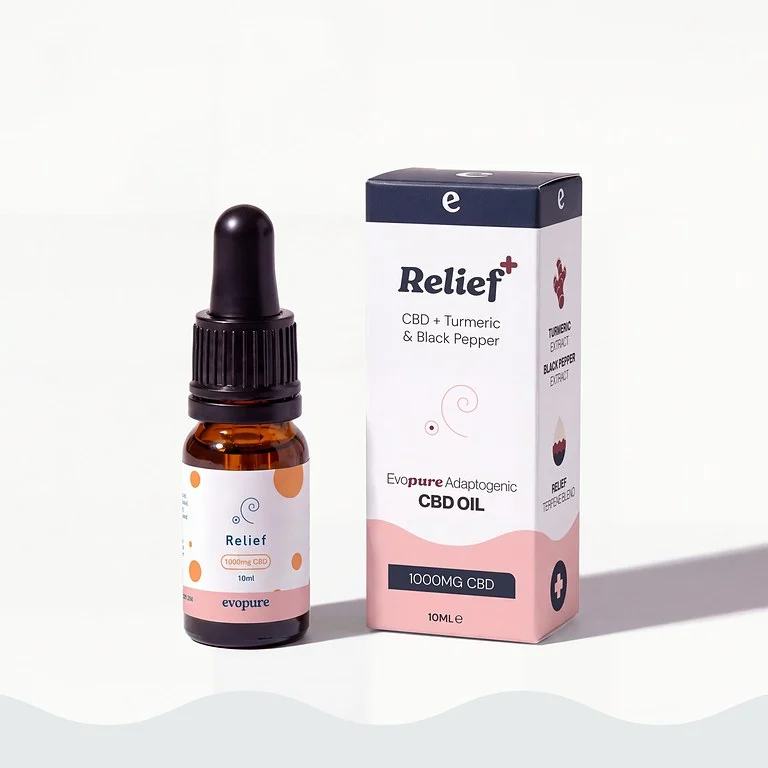
Our CBD Balm, Muscle and Joint Support contains 600mg of broad spectrum CBD per tin (10mg per ml), with 0% THC, in a base of plant oils with peppermint, eucalyptus and juniper. It’s cooling, absorbs without a greasy residue, and is vegan, made in the UK and third-party lab tested, with reports available on our lab testing page. A coin-sized amount massaged in after a warm shower is how most customers use it. Many people pair it with our Relief CBD Oil as part of a daily routine.
Related guides
- See tension headaches for neck and shoulder tension.
- Waking stiff? See our guide to the best sleeping position.
- For what the NHS and NICE recommend, see our guide to lower back pain.
- Using a balm on a sore knee? Our guide to knee pain covers causes, exercises and when to see a GP.
- For heel pain, stretches and footwear matter far more than any balm: see plantar fasciitis stretches and what helps.
- For a sore shoulder, start with our guide to shoulder pain: the NHS exercises and when to get it checked.
- For a simple NHS hip exercise routine to pair with a massage, see our guide to hip pain.
- For elbow pain from gripping and DIY, see our honest guide to tennis elbow exercises and treatments.
- Muscle knots explained, including a simple self-massage routine.
- Wondering about a balm on a gout flare? See CBD cream and balm for gout.
- Wondering about leg pain that runs from the buttock down? See our honest guide to CBD for sciatica, with what the NHS recommends.
FAQs
What is CBD balm good for?
Most people use CBD balm as a cooling massage balm on a specific area, such as shoulders, knees or calves after exercise or a long day. It’s a cosmetic, not a treatment for pain or any medical condition.
Does CBD balm work for muscle pain?
Research is early. Small trials found topical CBD improved scores in thumb arthritis and nerve pain, but there’s little research on everyday muscle aches, and CBD balm isn’t a treatment for pain. Many people like it as part of a recovery routine, mainly for the cooling feel and massage.
How do you use CBD balm?
Massage a pea to coin-sized amount into clean skin over the area for 1 to 2 minutes, ideally after a warm shower. Reapply up to three times a day, and wash your hands afterwards.
How long does CBD balm take to work?
The cooling feel from peppermint, eucalyptus or menthol is almost immediate. There’s no good evidence on how long CBD itself takes to have any effect in the skin.
Is CBD balm or oil better for pain?
Neither is a treatment for pain. A balm is used on one area and very little reaches the bloodstream; an oil is swallowed and works throughout the body. Many people use an oil daily and a balm on a specific spot.
Does CBD balm get into your bloodstream?
Only a little. Studies of ordinary topical products found low or unmeasurable CBD in the blood, while transdermal products designed to cross the skin deliver more.
How much CBD is in a CBD balm?
It varies by brand and tub size, so compare the mg per ml rather than the headline number. Our balm has 600mg per tin, which is 10mg per ml.
Is CBD balm legal in the UK?
Yes. CBD balms are sold as cosmetics, which must have a safety assessment, be notified to the government’s cosmetic notification service and have a UK Responsible Person on the label. The FSA’s CBD rules cover CBD you swallow.
Will CBD balm show up on a drug test?
It’s very unlikely. Drug tests look for THC, and studies of topical CBD products found no positive urine tests. A broad spectrum balm with THC not detected on its lab report lowers the risk further.
Can I use CBD balm every day?
Yes. Balms can be used daily, up to three times a day, as long as your skin tolerates the ingredients.
Can CBD balm get you high?
No. CBD isn’t intoxicating, and THC-free balms contain no THC.
Can I use CBD balm when pregnant?
We don’t recommend our products during pregnancy or breastfeeding. Speak to your midwife or GP about safe options for aches in pregnancy.
Sources
- Heineman JT et al (2022). A randomized controlled trial of topical cannabidiol for the treatment of thumb basal joint arthritis. Journal of Hand Surgery.
- Xu DH et al (2020). The effectiveness of topical cannabidiol oil in symptomatic relief of peripheral neuropathy of the lower extremities. Current Pharmaceutical Biotechnology.
- Hammell DC et al (2016). Transdermal cannabidiol reduces inflammation and pain-related behaviours in a rat model of arthritis. European Journal of Pain.
- Zamarripa CA et al (2024). Pharmacokinetics and pharmacodynamics of five distinct commercially available hemp-derived topical cannabidiol products. Journal of Analytical Toxicology.
- Jain M et al (2026). Exploratory crossover pharmacokinetic study of a hemp extract-based cosmetic product: topical and oral routes. Pharmaceuticals.
- Varadi G et al (2023). Systemic bioavailability of cannabidiol and THC from a novel transdermal delivery system in healthy adults. Advances in Therapy.
- Stinchcomb AL et al (2004). Human skin permeation of Delta8-tetrahydrocannabinol, cannabidiol and cannabinol. Journal of Pharmacy and Pharmacology.
- Food Standards Agency, GOV.UK. Cannabidiol (CBD) guidance.
- Office for Product Safety and Standards, GOV.UK. Cosmetic products: statutory guidance for Great Britain.
- GOV.UK. Submit a cosmetic product notification.
- NHS. Contact dermatitis.
This guide is general information, not medical advice. Evopure makes the CBD Balm, Muscle and Joint Support.