





Last updated: October 2026
CBD’s half-life is about 1 to 11 hours after a single dose and 2 to 5 days with regular daily use. It takes around five half-lives to clear, so most of a one-off dose is gone within 1 to 3 days, while a daily user may still carry traces for 10 to 25 days after stopping.
For drug tests, the clock that matters is THC, not CBD: standard UK tests don’t look for CBD at all. Below: the numbers from human studies, test windows, flushing myths and what 10mg a day means.
How long does CBD stay in your system?
A substance is mostly cleared after about five half-lives. Applied to the half-lives measured in human studies, that gives these rough timelines:
| How you use CBD | Half-life in studies | Mostly cleared within |
|---|---|---|
| One dose of oil or spray | About 1 to 11 hours | About 1 to 3 days |
| Smoked once | About 31 hours | About a week |
| Large doses twice a day for a week | About 60 hours | Around 2 weeks |
| Daily use by mouth over time | 2 to 5 days | About 10 to 25 days after stopping |
These are estimates. A small dose such as 10mg leaves very low levels that fall below what most tests can measure sooner, while very sensitive lab methods can pick up traces for longer.
Does CBD build up? A little. In a trial of healthy adults taking CBD twice a day, levels settled after about 2 days at 1.8 to 2.6 times the first-dose level, which is why regular users take longer to clear it.
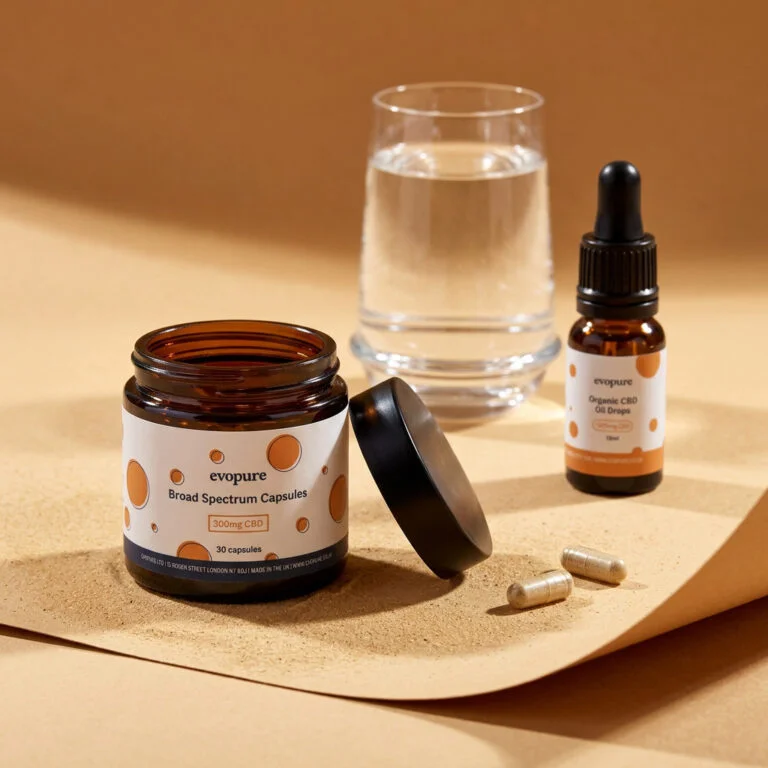
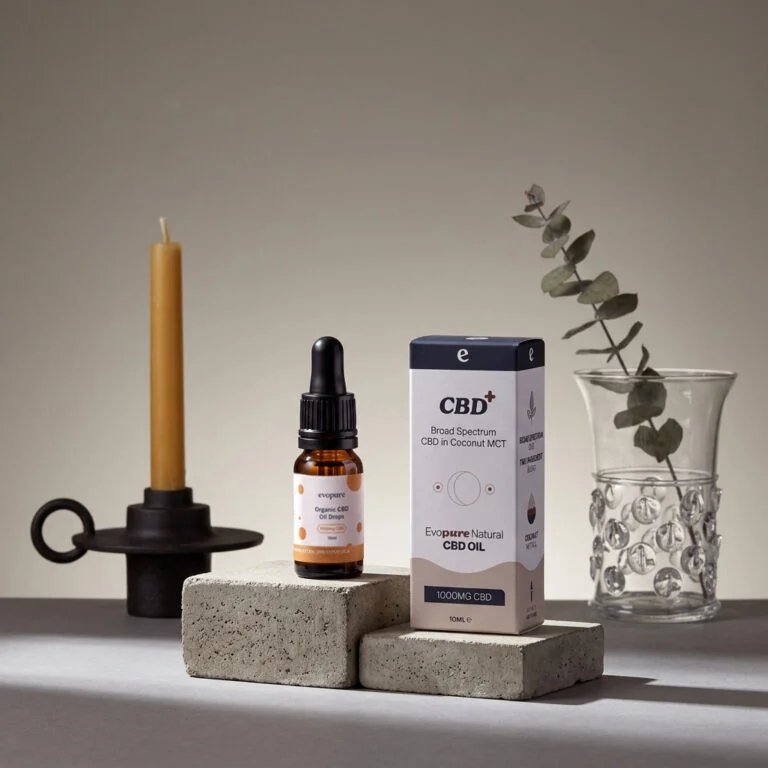
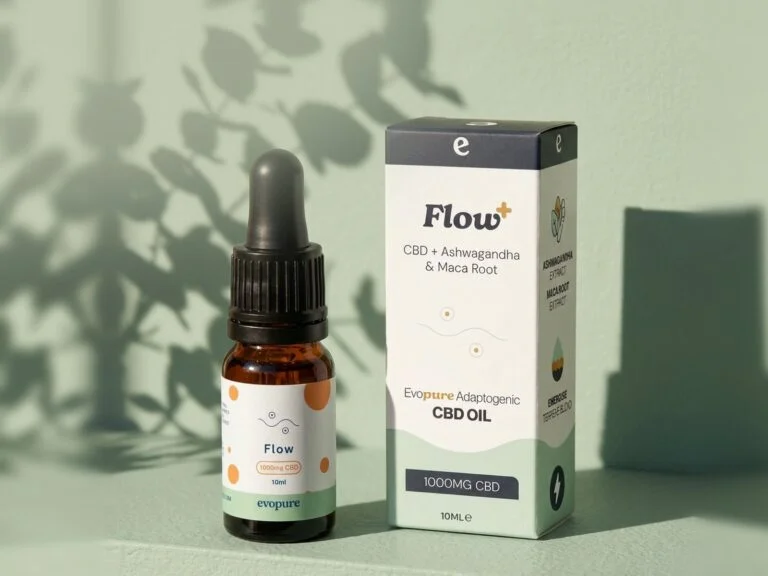
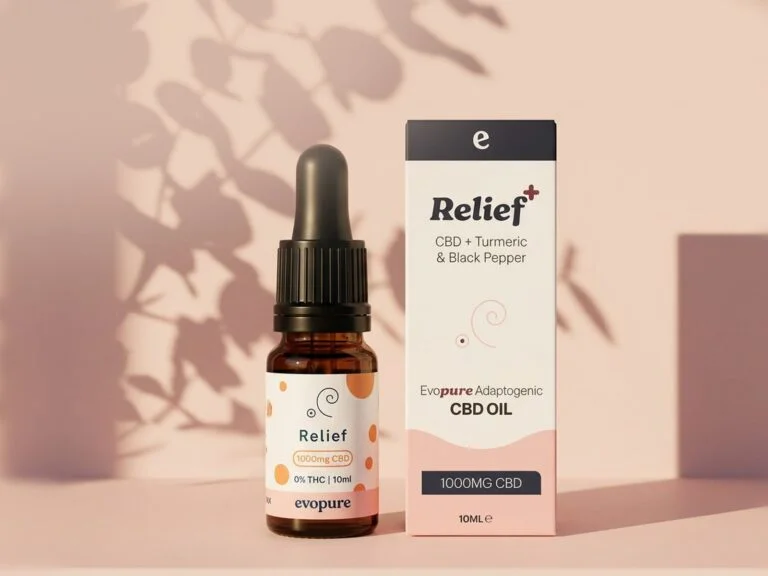
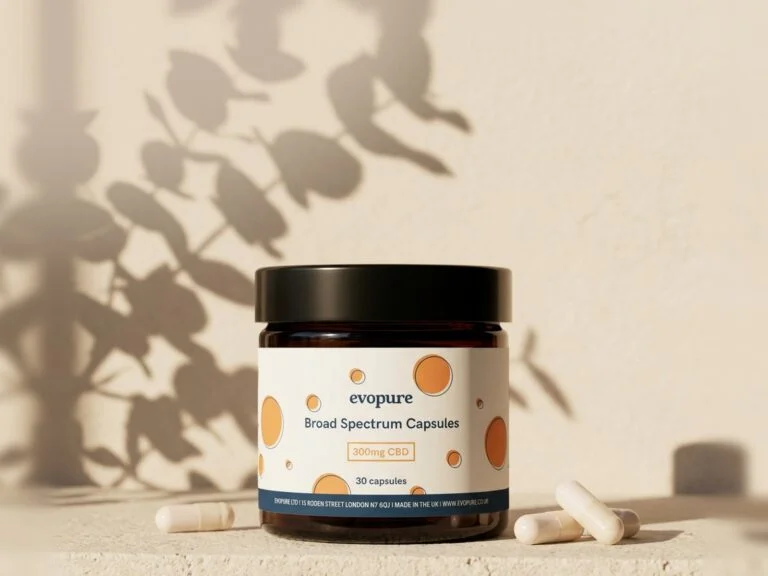
All three are broad spectrum with 0% THC, and every batch is tested by an independent lab. Even so, no CBD product can guarantee a negative drug test. A lab report showing THC “not detected” lowers the risk: ask for your batch report on our lab testing page.
CBD half-life explained
A half-life is the time it takes for the amount of a substance in your blood to halve. A 2018 University of Nottingham review and later trials in healthy volunteers reported these:
| How CBD was taken | Half-life |
|---|---|
| Mouth spray, single dose | 1.4 to 10.9 hours |
| Oil, single 50mg dose | About 6 hours |
| Smoked | About 31 hours |
| 750mg or 1,500mg twice a day for 7 days | About 60 hours |
| Taken by mouth daily over time | 2 to 5 days |
It’s longer with regular use because CBD is fat-soluble. It spreads into body fat and is released slowly, so the last traces linger. In the high-dose trial, most of the drop happened with an effective half-life of 10 to 17 hours; the 60 hours describes that slow tail. Those doses were far above supplement amounts.
How long does CBD show up on tests? Urine, blood, saliva and hair
Standard UK drug tests, for work, the police or probation, look for THC and its breakdown product THC-COOH, not CBD. Labs can measure CBD in urine if they choose to (in one Johns Hopkins study it peaked about 5 hours after an oral dose), but it isn’t on a standard panel and wouldn’t count as a failed test.
So the useful question is how long THC can be detected, in case your product contained any:
| Test | Where it’s used | THC typically detectable |
|---|---|---|
| Urine | Most workplace tests | 2 to 3 days after one-off use; up to a month for regular users |
| Saliva | Police roadside kits, some employers | Drugs generally 5 to 48 hours |
| Blood | Police station, after a roadside screen | Drugs generally 1 to 2 days at low levels |
| Hair | Less common, for longer histories | The longest window of any test |
For workplace, roadside and sports testing in detail, read does CBD show up on a drug test? If you drive, see CBD oil and driving in the UK, and if you compete, see CBD in sport and the UKAD rules.
Why full spectrum matters
Full spectrum CBD keeps the hemp plant’s trace THC, and daily use can add up. In a 2026 Johns Hopkins trial, 60 adults took 100mg of CBD in MCT oil twice a day for two weeks, with between 0 and 3.7mg of THC per dose. At least one person in every group whose oil contained any THC tested positive in urine, one sample from the CBD-only group was positive too, and two samples were still positive a week after stopping.
After a single 100mg dose of pure CBD, the same group found no urine sample reaching the workplace confirmation cut-off. The difference is THC, not CBD. See full spectrum vs broad spectrum vs isolate and how to read a CBD lab report.
Got a drug test coming up? Our CBD drug test guide covers what each test looks for, the cut-offs, your rights at work and what to do if you test positive.
Can you flush CBD out of your system fast?
No, not in any proven way. Your liver breaks CBD down, and nothing you can buy or do has been shown to speed that up. The only reliable method is time.
- Drinking lots of water: it doesn’t speed up how your liver clears CBD, and drinking far more than you need can dangerously dilute the sodium in your blood. Our guide to how much water you should drink covers the safe amount.
- Exercise and saunas: there’s no evidence they clear CBD faster.
- Detox drinks, pills and “clear” kits: we’re not aware of any good evidence that they remove cannabinoids from your body.
We won’t give tips on getting through a drug test. The honest route is to stop any product that might contain THC early, allow time, and keep the lab report for the CBD you use.
Because CBD lingers for days with regular use, spacing it from a medicine doesn’t separate them. See whether to stop CBD before surgery and can CBD interact with medication?
How long does 10mg of CBD stay in your system?
A single 10mg dose is small. In one trial, a 50mg dose of CBD oil peaked at only about 9.4 ng/ml in blood after 4 hours, with a half-life of around 6 hours, so most of a single 10mg dose would be gone within a day or two. Taken daily, a little builds up.
10mg is also the figure in the Food Standards Agency’s advice for healthy adults, and the first CBD products the FSA board recommended for approval in September 2026 are capped at 10mg a day. See the FSA’s CBD novel food approvals and our CBD dosage guide.
The FSA’s 10mg a day figure is precautionary advice rather than a legal limit, set while longer-term safety research continues. At Evopure we think it is a very cautious figure, and many adults use more. If you go above it, increase slowly, and check with your GP or pharmacist first if you take any medication.
Our CBD products are for adults (18+) only. We don’t recommend our products during pregnancy or breastfeeding. For more, see CBD oil while breastfeeding.
What affects how long CBD stays in your body?
- How much and how often: the biggest factors, as higher doses and daily use build up.
- Body fat: CBD is stored in fat tissue, so people with more body fat may hold onto it longer.
- How you take it: single doses under the tongue clear faster than regular oral use builds up.
- Food: in a trial, taking CBD with a high-fat meal raised the amount absorbed about 4.2-fold but didn’t change the half-life. Our guide to CBD bioavailability explains why.
- The product: in one study, urine CBD peaks after the same 100mg dose ranged from 151 to 1,274 ng/ml depending on the formulation.
- Liver function and other medicines: the liver breaks CBD down, and some medicines affect the same enzymes.
How long do CBD’s effects last?
Effects wear off well before CBD leaves your body, and staying in your system isn’t the same as affecting you: here’s why CBD doesn’t make you feel high.
- Oil under the tongue: felt in 15 to 45 minutes, lasting several hours.
- Capsules and edibles: felt in 1 to 2 hours, lasting longer and more gently.
- Vaping: felt within minutes, but shorter-lived.
For the other end of the timeline, see how long CBD oil takes to work, and to compare formats, CBD oil vs capsules. On the law, see is CBD oil legal in the UK?
FAQs
How long does CBD stay in your system?
After a single dose, usually 1 to 3 days. With regular daily use, CBD’s half-life is 2 to 5 days, so traces may remain for about 10 to 25 days after stopping.
What is the half-life of CBD?
About 1.4 to 10.9 hours after a single mouth-spray dose, around 6 hours after a single dose of oil, around 31 hours when smoked, and 2 to 5 days with regular oral use.
How can I get CBD out of my system fast?
There’s no proven way. Water, exercise and detox products don’t meaningfully speed it up. Time is the only reliable method.
Does drinking water flush out CBD?
No. CBD is cleared mainly by the liver, not flushed out with water, and drinking excessive water can be harmful.
Will CBD show up on a drug test?
Standard tests look for THC, not CBD. Products containing THC can cause a positive result, so choose THC-free broad spectrum or isolate with a lab report. No CBD product can guarantee a negative test.
How long does CBD stay in your urine?
Standard drug tests don’t look for CBD in urine. What matters is THC, which can show for 2 to 3 days after one-off use and up to a month in regular users.
Does CBD build up in your body?
A little. With twice-daily use, levels settle after about 2 days at roughly twice the single-dose level, and CBD stored in fat is released slowly.
How long do the effects of CBD last?
Usually several hours from oil under the tongue, a little longer from capsules, and shorter from vaping.
Sources
- Millar SA et al (2018). A systematic review on the pharmacokinetics of cannabidiol in humans. Frontiers in Pharmacology.
- Taylor L et al (2018). A phase I, randomized, double-blind, placebo-controlled, single ascending dose, multiple dose, and food effect trial of the safety, tolerability and pharmacokinetics of highly purified cannabidiol in healthy subjects. CNS Drugs.
- Hosseini A et al (2021). A phase I trial of the safety, tolerability and pharmacokinetics of cannabidiol administered as single-dose oil solution and single and multiple doses of a sublingual wafer in healthy volunteers. British Journal of Clinical Pharmacology.
- Spindle TR et al (2020). Urinary pharmacokinetic profile of cannabinoids following administration of vaporized and oral cannabidiol and vaporized CBD-dominant cannabis. Journal of Analytical Toxicology.
- Sholler DJ et al (2022). Urinary pharmacokinetic profile of cannabidiol (CBD), THC and their metabolites following oral and vaporized CBD and vaporized CBD-dominant cannabis administration. Journal of Analytical Toxicology.
- Wolinsky D et al (2026). The acute and chronic pharmacokinetics and pharmacodynamics of oral cannabidiol with and without low doses of delta-9-tetrahydrocannabinol. Journal of Analytical Toxicology.
- Verstraete AG (2004). Detection times of drugs of abuse in blood, urine, and oral fluid. Therapeutic Drug Monitoring.
- FRANK. Cannabis.
- Food Standards Agency. Cannabidiol (CBD) guidance.
This guide is general information, not medical or legal advice.